Fort Stevens State Park: Day Trip from Gearhart
Fort Stevens State Park sits 15 minutes north of Gearhart and packs more variety into a single day trip than most visitors expect. The park covers 4,300 acres at the northwest tip of Oregon, where the Columbia River meets the Pacific — and it holds a shipwreck you can walk up to, military batteries from three different wars, a freshwater lake for swimming and fishing, and 15 miles of trails through coastal forest.
Here is what you can see on a day trip from Gearhart:
- The Peter Iredale shipwreck — rusted iron skeleton of an 1890’s sailing ship, accessible on foot at low tide
- Civil War through WWII military installations — the only mainland U.S. fort fired on by a foreign enemy since the War of 1812
- Coffenbury Lake — a 50-acre freshwater lake with swimming, kayaking, and trout fishing
- South Jetty — an observation platform at the mouth of the Columbia River, where winter waves can exceed 40 feet
- 15 miles of trails for biking and hiking through spruce and hemlock forest, wetlands, and dunes
A day-use parking permit is required ($10 for Oregon residents, $12 for non-residents per vehicle). Annual Oregon State Parks passes and valid campsite reservations also work. Gearhart by the Sea guests can drive up, spend half a day or a full day, and be back at their condo in time to cook dinner.
How Do You Get to Fort Stevens from Gearhart?
Fort Stevens State Park is roughly 15 minutes by car from Gearhart by the Sea — one of the shortest drives to a major Oregon state park from any north coast accommodation.
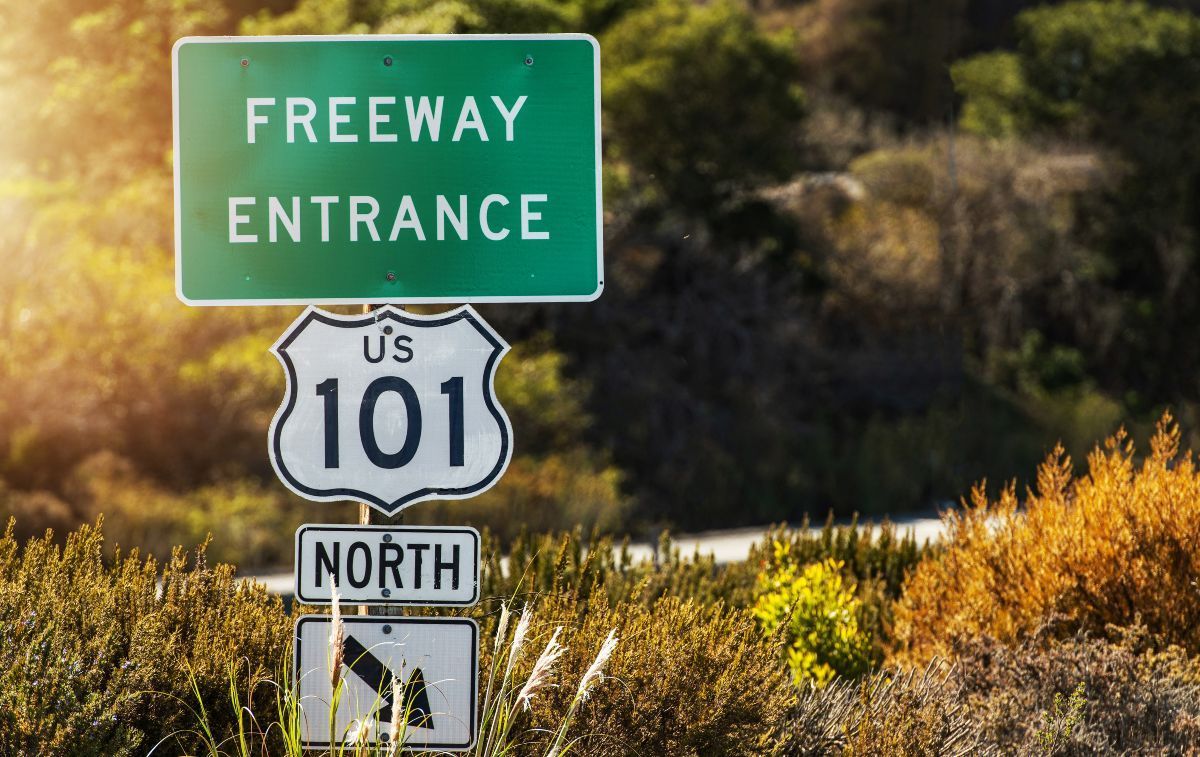
Take US-101 north out of Gearhart through Warrenton, then follow the signs for Fort Stevens State Park on Ridge Road (also marked as Peter Iredale Road for the shipwreck area). The park has multiple entrances, and which one you use depends on what you want to see first:
- Peter Iredale Beach access — the most popular entrance, bringing you directly to the shipwreck and beach. Take Peter Iredale Road from Ridge Road.
- Historic Area / Military Museum — follow signs for the Fort Stevens Historic Area to reach Battery Russell, the military museum, and the disc golf course.
- Coffenbury Lake — the lake entrance is off the main park road, between the campground and the day-use areas.
- South Jetty — continue past the campground entrance to reach the South Jetty observation platform at the Columbia River mouth.
The park is large enough that you will want to drive between areas rather than walk. Plan your route based on tide timing — if you are visiting the shipwreck, check the tide chart and start there at low tide, then work inland to the batteries and lake as the tide comes in.
What Is There to See and Do at Fort Stevens State Park?
Fort Stevens packs beach, lake, forest, and military history into a single park — enough to fill three hours or an entire day, depending on how deep you go.
Coffenbury Lake
Coffenbury Lake is a 50-acre freshwater lake surrounded by coastal forest, with two picnic areas, a small boat ramp, and designated swimming areas. The lake is stocked with rainbow trout, and fishing is open year-round with a valid Oregon fishing license. In summer, the lake warms enough for comfortable swimming — a contrast to the Pacific, which rarely breaks 55°F even in August.
Kayaking and stand-up paddleboarding are popular on calm days. Oregon State Parks offers ranger-guided kayak tours of the lake during the summer months. The two-mile loop trail around Coffenbury Lake is flat, shaded, and easy — a good option for families or anyone who wants a short walk near the water.
South Jetty and the Columbia River Mouth
The South Jetty extends into the Pacific at the mouth of the Columbia River — one of the most dangerous river bar crossings in the world. An observation platform at the end of the road gives you a view of the bar, the shipping channel, and the Washington shoreline across the river.
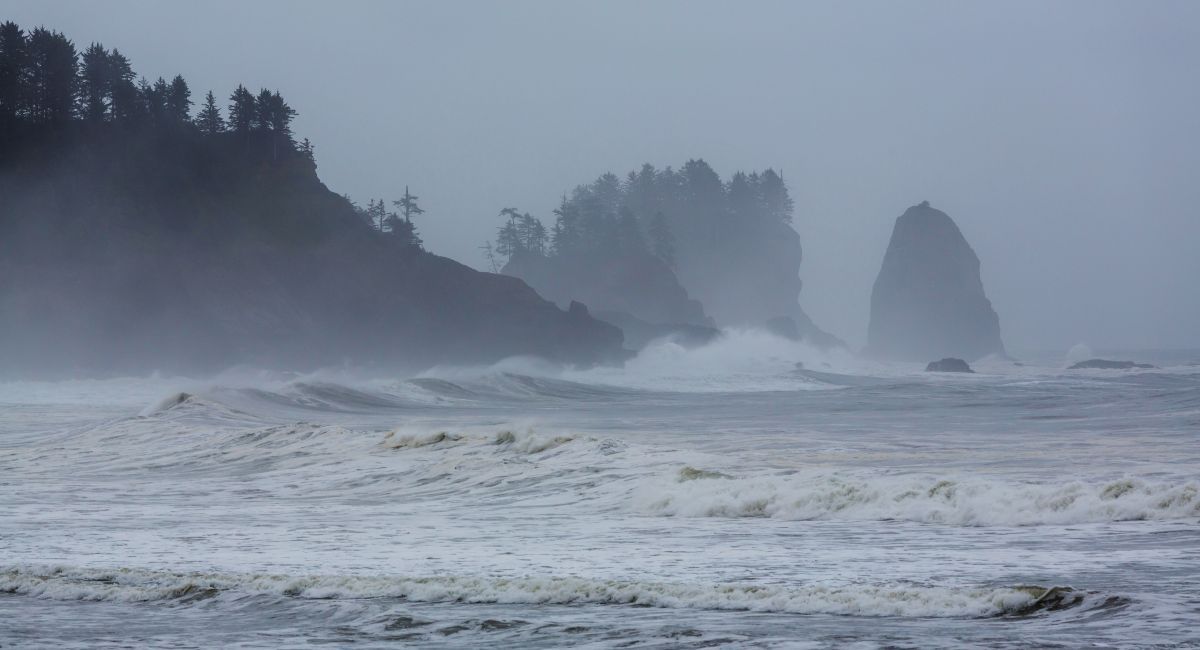
On calm days, the jetty area is a productive spot for wildlife watching. Harbor seals haul out on the rocks, brown pelicans work the current, and during the winter months, gray whales pass within viewing distance. In storm season, waves at the jetty can exceed 40 feet — dramatic to watch from the observation platform, but stay off the rocks and the jetty itself during high surf.
Beach Access and Beachcombing
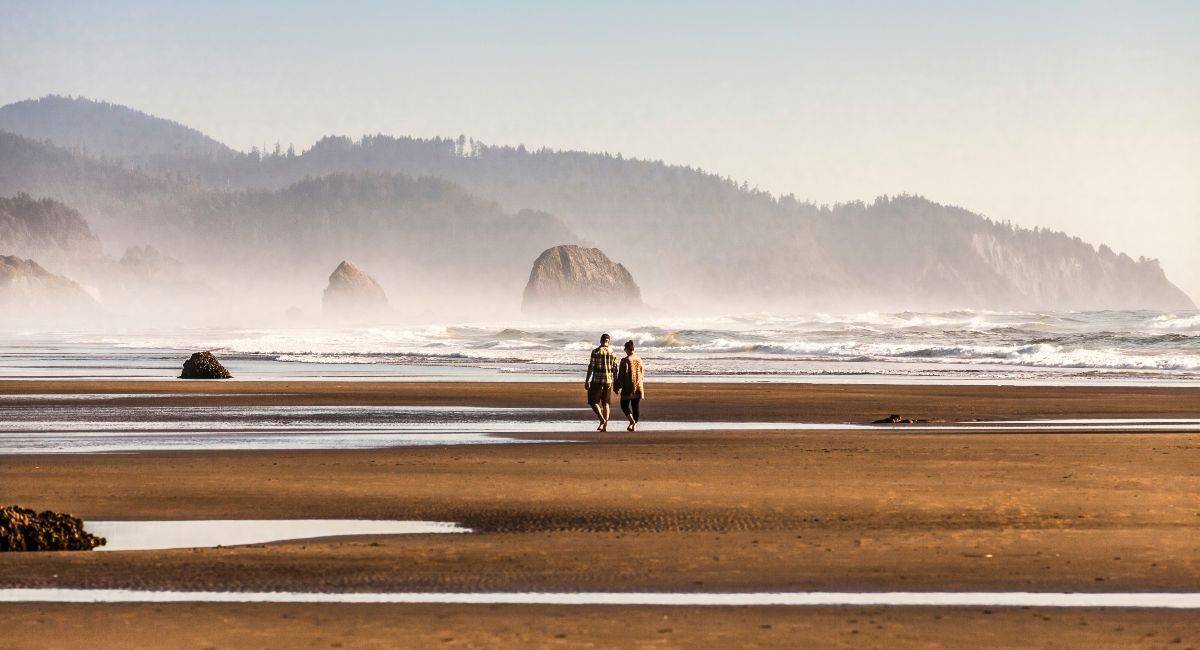
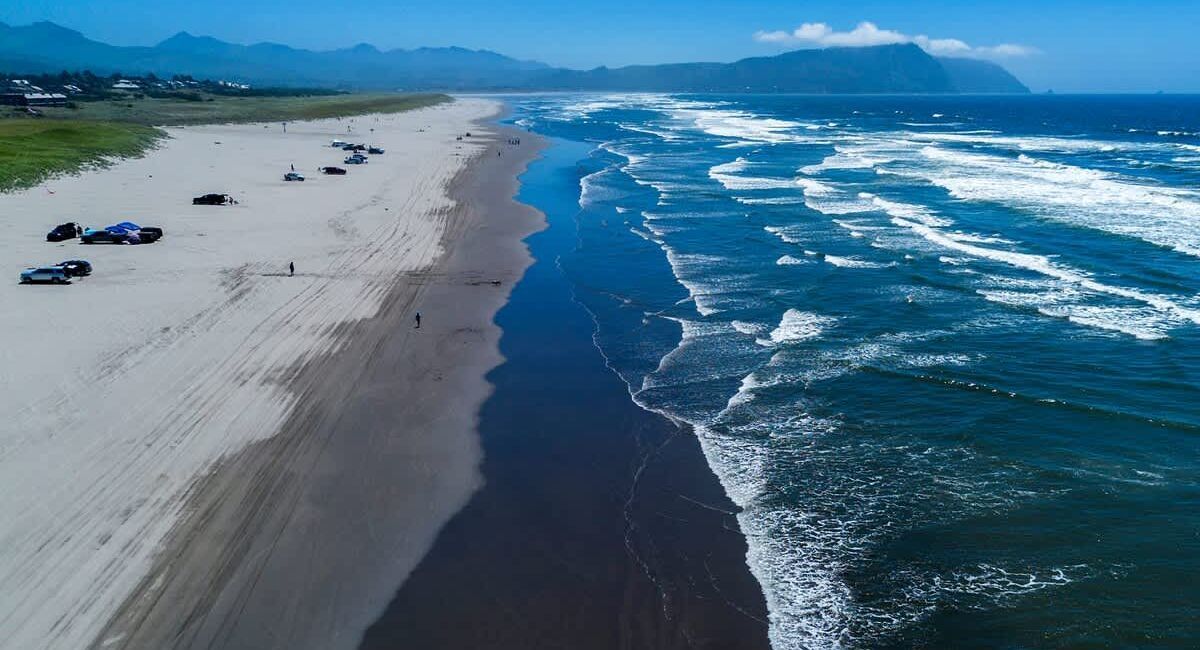
Fort Stevens has miles of open beach accessible by car (street-legal vehicles only, four-wheel drive recommended) or on foot from several parking areas. The stretch between the Peter Iredale shipwreck and the South Jetty is one of the widest, flattest beaches on the north Oregon coast — good for kite flying, fat-tire biking, and long walks.
Beachcombing picks up after winter storms, when agates, sand dollars, and shells wash onto the wrack line. The beach near the shipwreck tends to collect more debris than the open stretches farther north.
Seasonal note: From March 15 through September 15, the Columbia River beach on Clatsop Spit closes to vehicles, horses, kites, and pets to protect
western snowy plover nesting habitat. During this window, walking is restricted to wet sand only in the closure area. The Peter Iredale beach and South Jetty areas remain accessible.
Wildlife Viewing
Fort Stevens sits at the intersection of ocean, river, forest, and freshwater lake — four habitats in one park. Bring binoculars. Species you are likely to see depending on the season:
- Year-round: Bald eagles, great blue herons, harbor seals, black-tailed deer, Roosevelt elk (often grazing near the campground at dawn and dusk)
- Winter: Gray whales (from the South Jetty observation platform), dunlins and sanderlings on the beach
- Summer: Brown pelicans, osprey, Caspian terns working the river mouth
- Coffenbury Lake: Herons, kingfishers, and the occasional river otter
What Is the Peter Iredale Shipwreck?
The Peter Iredale is a British four-masted steel barque that ran aground on Clatsop Spit on October 25, 1906, while bound for Portland with 1,000 tons of ballast and a crew of 27 (including two stowaways). No one died — Captain H. Lawrence and his crew were rescued — but the ship was a total loss. Over 120 years later, the rusted iron skeleton of the bow, a few ribs, and the stumps of the masts still jut from the sand.
The Peter Iredale is the most-visited and most-photographed shipwreck on the Oregon coast. It is accessible on foot from the Peter Iredale Beach parking area — a short walk across flat sand. The wreckage sits in the surf zone, so how much you can see and touch depends on the tide.
When to visit: Low tide or outgoing tide is best. At high tide, waves wash through the wreck, and access is limited. Check the tide chart before you drive out. Early morning and foggy days offer solitude; sunset attracts photographers and crowds.
The wreck is slowly disappearing. Each year, storms strip more iron away. Guests who visited five or ten years ago tell us the ribs were taller — what is left now is still striking, but it will not last forever. If you have not seen it, this is the year.
We hear from families staying with us that the shipwreck is the highlight for kids — climbing on rusted iron that has been in the ocean since 1906 lands differently than a museum exhibit.
What Is the Military History of Fort Stevens?
Fort Stevens was an active military installation for 84 years, from the Civil War through the end of World War II. It was part of a three-fort defense system — along with Fort Columbia and Fort Canby in Washington — protecting the mouth of the Columbia River.
The fort's headline fact: on June 21, 1942, a Japanese submarine (I-25) surfaced offshore and fired 17 shells at Fort Stevens. The shells caused no casualties and only minor damage, but the attack made Fort Stevens the only mainland U.S. military fort fired on by a foreign enemy since the War of 1812. The commanding officer ordered his troops not to return fire, reasoning that the submarine was trying to provoke the fort into revealing the position of its guns.
What You Can See Today
The Fort Stevens Historic Area preserves the original Civil War–era earthen fortifications — among the few surviving examples on the West Coast — along with turn-of-the-century concrete artillery batteries, including Battery Russell, the largest and best-preserved.
- Military Museum and Visitor Center — open year-round, with exhibits covering the fort's history from 1863 through 1947. Maps, photographs, and artifacts from the 1942 Japanese attack are on display.
- Battery Russell — a massive concrete gun emplacement less than a mile from the campground. Walk through the corridors and gun rooms.
- Underground WWII Command Center tours — available in summer through the Friends of Old Fort Stevens (call 503-861-2000 for schedules and reservations). The underground bunker is not accessible on your own.
- Disc golf course — a 23-hole disc golf course (Columbia Shore) is laid out through the Historic Area, weaving between batteries and bunkers.
Plan 60–90 minutes for the Historic Area if you want to walk the batteries and visit the museum. The underground tour adds another hour.
What Are the Best Trails and Outdoor Activities?
Fort Stevens has 15 miles of trails — nine miles of paved bike paths and six miles of hiking trails — running through spruce and hemlock forest, wetlands, dunes, and along the lakeshore.
Biking the Paved Trails
The nine miles of paved trails are flat, shaded, and interconnected, making them accessible to riders of all levels. The loops run through coastal forest between the campground, Coffenbury Lake, the Historic Area, and the beach access points. You can ride the entire paved network in about 90 minutes at a casual pace, or pick a single loop for a shorter ride.
Bike rentals are available in the park during the summer months (adult and youth sizes). If you are bringing bikes from Gearhart, the trailhead parking areas near the campground and Coffenbury Lake are the best starting points.
Renters we talk to who bike the paved trails say the loop through the forest is the highlight — flat, shaded, and quiet even on summer weekends. The trail surface is smooth enough for road bikes, though wider tires handle the occasional sand drift better.
Hiking Around Coffenbury Lake and Beyond
The two-mile Coffenbury Lake loop is the park's most popular hiking trail — flat, well-maintained, and shaded by spruce and hemlock. It is an easy walk for families, and the lake views keep it interesting. The trail connects to the broader park trail network if you want to extend your hike toward the beach or the Historic Area.
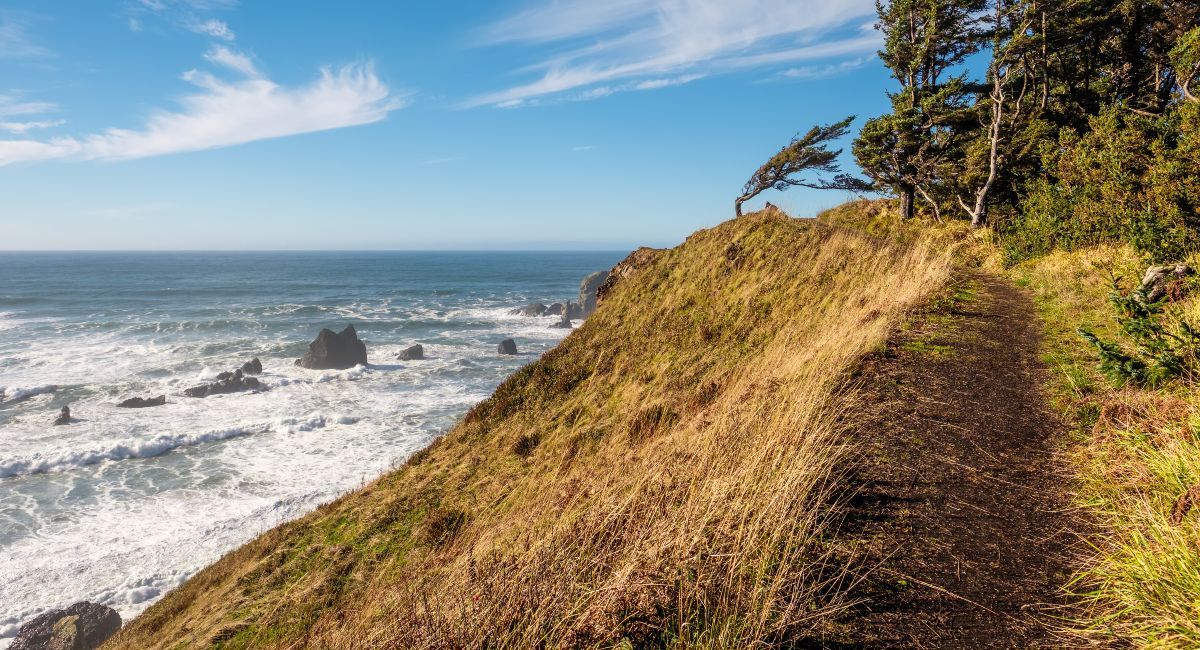
For a longer walk, the Oregon Coast Trail runs through the northwest corner of the park. The segment between the South Jetty and Sunset Beach covers open dunes and beach with wide ocean views — more exposed than the forest trails, so bring sun protection and water even on overcast days.
Seasonal Activities
- Razor clamming (fall through spring): The beach at Fort Stevens is a productive razor clamming territory during low tides. An Oregon shellfish license is required — check ODFW for biotoxin closures before you dig. Our clam-digging guide covers technique and regulations.
- Trout fishing (year-round): Coffenbury Lake is stocked with rainbow trout. Shore casting works from several spots around the lake. Oregon fishing license is required.
- Berry picking (summer): Salmonberries, blackberries, and huckleberries grow along the park trails. Peak season is July and August.
- Foraging (fall): The spruce and hemlock forest supports a variety of edible mushrooms in the fall — chanterelles in particular. If you are not experienced with mushroom identification, go with someone who is.
What Should You Know Before You Go?
A few logistics worth sorting before you leave Gearhart.
Parking Permits and Fees
Day-use parking permits are required at Fort Stevens State Park. Self-serve kiosks are located at the main parking areas. Current fees:
- Daily permit: $10 per vehicle (Oregon residents), $12 per vehicle (non-residents)
- Annual Oregon State Parks pass: $60 (residents), $75 (non-residents) — valid at all Oregon state parks that require permits
- Exemptions: Walking, biking, or arriving by public transit does not require a permit. A valid campsite reservation also serves as a day-use permit.
If you visit Oregon state parks more than six times a year, the annual pass pays for itself. Buy it online or at the Fort Stevens Visitor Center in the Historic Area.
Seasonal Closures
The western snowy plover nesting closure runs
March 15 through September 15 on Clatsop Spit (the Columbia River beach). During this window:
- No vehicles, horses, kites, or pets on the closed beach section
- Walking is restricted to wet sand only
- Yellow signs mark the closure boundaries
The rest of the park — including the Peter Iredale beach, South Jetty, Coffenbury Lake, and all trails — remains open year-round.
What to Bring
- Layers and a rain jacket — coastal weather shifts fast, even in summer. Fort Stevens can be cold and windy when Gearhart is calm.
- Binoculars — useful at the South Jetty for seals and whales, and at Coffenbury Lake for herons and eagles.
- Tide chart — check tides before you go, especially if visiting the Peter Iredale shipwreck. NOAA Tides & Currents app or any tide chart website covers the Clatsop Beach station.
- Insect repellent — mosquitoes are heavy near Coffenbury Lake from March through July.
- Water and snacks — no concessions inside the park. The nearest food is back in Warrenton or Gearhart.
- Cash or card for the parking kiosk — the self-serve machines accept both.
Why Stay in Gearhart When Visiting Fort Stevens?
Fort Stevens is a 15-minute drive from Gearhart by the Sea — close enough for a morning trip, an afternoon trip, or a full day, without relocating your base.
Guests who have stayed with us regularly ask which direction to explore first — we tell them to start at the shipwreck at low tide, then work inland to the batteries and lake as the tide rises. By the time you have hiked the Coffenbury loop and walked the gun batteries, you are ready for dinner — and your full-kitchen condo at Gearhart is 15 minutes away, no restaurant reservation required.
Gearhart also puts you within easy reach of the rest of the north coast. A Fort Stevens day trip pairs well with a stop in Astoria on the way back — the Columbia River Maritime Museum is on the route, and Fort Clatsop (Lewis and Clark's 1805–1806 winter camp) is about 10 minutes from the park. Check our full Oregon coast activities guide for more ideas, or browse current deals and specials for your stay.
We have heard from families who planned an hour at Fort Stevens and ended up spending the whole day — the park is bigger than it looks on a map. Give yourself at least three hours if you want to see the shipwreck, the batteries, and the lake. A full day lets you add biking, beachcombing, and an Astoria side trip.
Book a stay at Gearhart by the Sea and use it as your base camp for Fort Stevens and the rest of the north Oregon coast.
About This Guide
This guide was written by the Gearhart by the Sea editorial team using information from Oregon State Parks (Fort Stevens park profile, facilities data, and seasonal closure dates), Travel Oregon (trail mileage and activity listings), the Peter Iredale Wikipedia article (ship history and wreck details), the National Park Service (Lewis and Clark National Historical Park and Fort Clatsop information), and the Columbia River Maritime Museum (Astoria museum hours and exhibits). Drive times were verified against current mapping data. Parking permit fees were confirmed against the Oregon State Parks day-use parking permit page. Gearhart by the Sea is a vacation rental property in Gearhart, Oregon, and has no commercial relationship with any organization cited in this guide.
Is Fort Stevens State Park free?
No. A day-use parking permit is required — $10 per vehicle for Oregon residents, $12 for non-residents. Annual Oregon State Parks passes ($60 residents, $75 non-residents) are also valid. If you walk or bike into the park, no permit is needed. Camping guests with a valid reservation do not need a separate day-use permit. Self-serve kiosks at the main parking areas accept cash and cards.
How long does it take to explore Fort Stevens State Park?
Plan at least three to four hours to see the Peter Iredale shipwreck, the military batteries, and Coffenbury Lake. A full day lets you add biking the paved trails, beachcombing, the South Jetty, and the military museum. Families with kids who want to explore the batteries and climb around the shipwreck should budget extra time — both tend to hold attention longer than expected.
Can you drive on the beach at Fort Stevens?
Yes. Vehicle access is permitted on the ocean beach at Fort Stevens (street-legal vehicles only, four-wheel drive recommended). Access points include Peter Iredale Beach and Sunset Beach. From March 15 through September 15, the Columbia River beach on Clatsop Spit closes to all vehicles to protect western snowy plover nesting habitat. The Peter Iredale beach section remains open to vehicles year-round.
Is the Peter Iredale shipwreck worth visiting?
Yes — it is the most-visited and most-photographed shipwreck on the Oregon coast. The rusted iron skeleton of a four-masted steel barque that ran aground in 1906 sits in the surf zone, accessible on foot from the parking area. Visit at low tide for the best access. The wreck is slowly disappearing as storms strip away iron each year, so what you see today is more than what future visitors will find.
Are dogs allowed at Fort Stevens State Park?
Dogs are allowed in most areas of the park on a leash (six feet or shorter). Dogs are not permitted on the Columbia River beach during the western snowy plover nesting closure (March 15 through September 15). Pet-friendly yurts and cabins are available for overnight stays. The Coffenbury Lake trails and Peter Iredale Beach are popular spots for walking dogs.
What is the best time of year to visit Fort Stevens?
Summer (June through September) offers the warmest weather, the longest days, and access to all areas of the park — including ranger-guided kayak tours and underground military bunker tours. Fall is quieter and good for mushroom foraging and storm watching. Winter brings gray whale migration past the South Jetty and dramatic storm surf. Spring has wildflowers and bird migration but also the start of the snowy plover closure on Clatsop Spit.
Can you swim at Fort Stevens State Park?
Yes — at Coffenbury Lake, which has two designated swimming areas with picnic tables and restrooms. The lake warms to a comfortable temperature in summer. Ocean swimming is possible but not recommended — water temperatures rarely exceed 55°F, currents are strong, and there are no lifeguards. The lake is the better choice for families and casual swimmers.
Recent Posts